Source Steel Cage Spherical Roller Bearings for Mining, Crushers, and Conveyors
Compare 30 listings of Steel Cage Spherical Roller Bearings from Wafangdian and Jinan suppliers. Buyers can review specifications like bore sizes, outer diameters, and packing options for industrial applications.
Key considerations
Products List


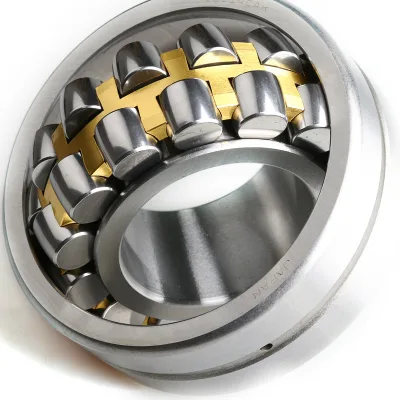


Double Rows Bearing Steel Cage Spherical Roller Bearing (22212E/22212EK)
$7.04 - $7.41
MOQ: 100 Pieces


Comprehensive Sourcing Guide
Strategic Sourcing Guide for Steel Cage Spherical Roller Bearings
Understanding Technical Specifications and Structural Variations
When sourcing Steel Cage Spherical Roller Bearings, buyers must first navigate a complex landscape of technical specifications that define performance and compatibility. The core keyword implies a specific structural design where the rolling elements are rollers rather than balls, housed within a cage made of pressed steel. This configuration is critical for applications requiring high load capacity and the ability to accommodate misalignment. The supplied data indicates that these bearings are available in both single-row and double-row configurations. While single-row variants are observed with specific outer dimensions ranging from 60mm to 115mm, double-row variants, which are typical for heavy-duty spherical roller applications, are documented with outer diameters extending from 280mm to 420mm.
The material composition is a primary determinant of durability. The rings and balls are frequently constructed from high-carbon chromium steel, specifically grades such as Gcr15 or Gcr15simn. These materials provide the necessary hardness and fatigue resistance for industrial environments. The cage structure is another vital observation; the data highlights a specific design where a brass cage is guided by a sleeve held in place, alongside other instances of pressed steel cages. The choice between brass and pressed steel often depends on the operating speed and the specific lubrication regime of the application. Furthermore, the bearings are categorized by their load direction, with distinct offerings for radial loads and thrust loads. The thrust bearing series, identified by codes such as 29200, 29300, and 29400, operates under different stress profiles compared to the radial spherical roller bearings found in the 22 series, such as models 22220MBW33 and 22340.
Dimensional precision is equally paramount. The observed bore sizes range significantly, with specific examples showing a bore of 180mm and an inner diameter of 200mm. The outer diameters vary from small and medium-sized units (60-115mm) to large (200-430mm) and extra-large (440mm) categories. For instance, a specific large-unit observation notes an outer diameter of 420mm, a width of 138mm, and a weight of 44.7kg. Buyers must verify that the specific model number, such as the 22212E or 22212EK, matches the required bore and outer diameter for their machinery. The separation status of the bearing is another critical specification; some units are sold as separated components, allowing for easier installation in tight spaces, while others are unseparated, offering a more compact, ready-to-install solution.
Compliance, Certification, and Origin Verification
In the global procurement of industrial components, verifying the origin and compliance standards of the supplier is essential for risk mitigation. The supplied facts indicate that the majority of these bearings originate from China, with specific manufacturing hubs noted in Wafangdian, Linqing, and Jinan City in Shandong Province. Wafangdian, in particular, is a recognized center for bearing manufacturing in China. When evaluating suppliers, buyers should confirm that the production location matches the documentation provided, as regional manufacturing clusters often imply specific supply chain efficiencies or logistical advantages.
Regarding compliance, the data references ISO9001 and ISO9001-2008 standards. These certifications indicate that the manufacturing facility adheres to international quality management systems, ensuring consistent production processes. However, buyers must distinguish between the general quality management standard and specific product standards. The text also mentions precision grades such as P0 and P6. These grades refer to the tolerance levels of the bearing dimensions and running accuracy. P0 is the standard precision grade, while P6 offers tighter tolerances. It is crucial for buyers to verify that the specific order explicitly states the required precision grade, as this directly impacts the fit and performance within the host machinery.
The packaging standards also serve as an indicator of supplier professionalism. The observed packing methods range from single color box packing to industrial packaging involving cartons and pallets. Some suppliers offer "Original Standard" packing, which is vital for preserving the bearing's integrity during long-distance shipping. The presence of "Signal Packing" or "Industries Packing" suggests that the supplier has standardized their logistics to prevent damage. Buyers should ensure that the packing method selected protects the bearing from moisture and corrosion, especially given the steel composition of the rings and balls.
Cost Drivers and Pricing Dynamics
The pricing structure for Steel Cage Spherical Roller Bearings is influenced by a combination of material costs, manufacturing complexity, and order volume. The observed price range in the market spans from $0.01 to $9,999, a wide variance that reflects the diversity of sizes and specifications available. A bearing with a 60mm outer diameter will naturally cost significantly less than a unit with a 440mm outer diameter and a weight of 44.7kg. The cost is also driven by the specific model series; the 22 series and the 29 series (thrust bearings) may have different pricing tiers based on the complexity of the roller geometry and the cage design.
Minimum Order Quantity (MOQ) is a significant factor in the total cost of ownership. The observed MOQ ranges from 1 to 1000 units. For small-scale projects or prototyping, suppliers offering an MOQ of 1 are essential, allowing buyers to test performance without a large capital outlay. Conversely, for large-scale industrial deployments, negotiating an MOQ closer to 1000 can often result in a lower unit price. Buyers should also consider the "Sample" availability, as the data indicates that free samples are sometimes offered. Utilizing a free sample allows for a direct cost-benefit analysis before committing to a bulk order, effectively reducing the risk of purchasing non-compliant or substandard units.
Lead time is another hidden cost driver. The data specifies a delivery time of 5-15 days for certain units. However, this timeframe can fluctuate based on the origin of the product, the specific customization requirements, and the current global supply chain status. Customization is noted as available, which can extend the lead time. Buyers must factor in the time required for customization, such as specific cage materials or non-standard dimensions, into their production planning. Shipping methods, including air, ocean, and international express, also impact the final landed cost. Ocean freight is generally more economical for heavy units like the 44.7kg bearing, while air freight may be necessary for urgent, smaller orders.
Typical Applications and Load Direction Analysis
Steel Cage Spherical Roller Bearings are engineered for applications that demand robustness under heavy loads and the ability to handle shaft misalignment. The "Aligning Bearings" attribute confirms their primary function: to accommodate angular misalignment between the shaft and the housing. This makes them ideal for heavy machinery where perfect alignment is difficult to maintain or where the shaft may deflect under load. The radial load direction is the most common application, supporting the weight of rotating components in motors, pumps, and conveyors.
However, the data also highlights thrust bearings, identified by the 29200, 29300, and 29400 series. These units are designed to handle axial loads, which are forces acting parallel to the shaft. In applications where both radial and axial loads are present, such as in large gearboxes or heavy-duty crushers, the selection of the correct bearing series is critical. The double-row configuration, often seen in the 22 series, provides higher radial load capacity compared to single-row variants, making it suitable for the most demanding industrial environments.
The specific dimensions also dictate the application. Large bearings with outer diameters up to 430mm and extra-large units at 440mm are typically found in heavy industrial sectors like mining, cement processing, and steel manufacturing. These sectors require bearings that can withstand shock loads and continuous operation. The use of a brass cage guided by a sleeve suggests applications where the cage needs to be robust and stable at higher temperatures or speeds, while pressed steel cages might be preferred for cost-sensitive or standard speed applications. Understanding the specific load direction and magnitude is the first step in selecting the correct bearing from the available 22 series or 29 series options.
Supplier Evaluation and Quality Control Protocols
Evaluating a supplier for Steel Cage Spherical Roller Bearings requires a multi-faceted approach that goes beyond simple price comparison. Buyers should prioritize suppliers who can demonstrate a clear track record in the specific manufacturing hubs identified, such as Wafangdian or Jinan City. The presence of ISO9001 certification is a baseline requirement, but buyers should also inquire about the specific quality control processes used during the manufacturing of the Gcr15 or Gcr15simn steel rings. The precision of the machining, particularly for the P0 and P6 grades, must be verified through quality reports.
Quality control should extend to the cage manufacturing process. Whether the cage is pressed steel or brass, it must be free of burrs and defects that could cause premature failure. The data mentions "Single Color Box Packing" and "Industrial Package," which are indicators of how the supplier handles the final product. A reputable supplier will ensure that the packaging prevents corrosion and physical damage during transit. Buyers should also verify the "Separation" status of the bearing; if a separated bearing is required for installation, the supplier must ensure that the components are not damaged during the separation process and that they are returned to the correct assembly upon installation.
When evaluating suppliers, buyers should request documentation that confirms the model numbers, such as 22220MBW33 or 22340, match the physical product. The discrepancy between observed specifications, such as the outer diameter of 280mm to 420mm versus the specific 420mm unit, highlights the need for precise verification. A supplier that can provide detailed technical drawings and material certificates for the steel and cage components demonstrates a higher level of quality assurance. Additionally, the availability of free samples allows buyers to conduct their own physical inspections, checking for surface finish, dimensional accuracy, and the integrity of the cage guidance system.
Long-Term Procurement and Lifecycle Management
Sourcing Steel Cage Spherical Roller Bearings is not merely a transactional activity but a strategic decision that impacts the long-term reliability of industrial operations. The availability of customization suggests that buyers can tailor bearings to specific operational needs, which can extend the service life of the equipment. However, customization introduces complexity into the supply chain, requiring careful management of lead times and quality assurance. Buyers should establish a long-term relationship with suppliers who can consistently deliver the required precision grades and material specifications.
The wide range of outer dimensions, from small 60mm units to extra-large 440mm units, means that a single supplier may not be able to provide every size required. Buyers may need to diversify their supplier base to ensure a steady supply of different sizes and series. The observation of different packing methods, from single boxes to palletized industrial packaging, also suggests that logistics planning is a key component of long-term procurement. Ensuring that the correct packaging is used for each order size can prevent damage and reduce replacement costs.
Furthermore, the lead time of 5-15 days indicates a relatively quick turnaround, but this can be affected by the specific model and customization needs. Buyers should maintain a safety stock of critical bearings, especially for large, heavy units that may have longer lead times if they are not in standard inventory. The ability to source samples for testing is a valuable asset for maintaining quality over the long term. By regularly testing new batches against the established standards of Gcr15 steel and ISO9001 quality management, buyers can ensure that the bearings continue to meet the rigorous demands of their applications. Ultimately, the goal is to secure a supply chain that delivers consistent performance, minimizing downtime and maximizing the operational efficiency of the machinery.
FAQs
What materials are used for the rings and balls in these bearings?
The rings and balls are constructed from high-carbon chromium steel grades Gcr15 or Gcr15simn. These materials provide the necessary hardness and fatigue resistance required for demanding industrial environments and heavy load applications.
Which certification standards do the manufacturers typically hold?
Manufacturers typically hold ISO9001 or ISO9001-2008 certification standards. These certifications indicate that the production facility adheres to international quality management systems to ensure consistent manufacturing processes and product reliability.
Can I find bearings with a specific delivery time of 5-15 days?
Yes, specific units are available with a delivery time of 5-15 days. This timeframe applies to standard orders but may fluctuate based on customization requirements, the specific origin location, and current global supply chain conditions.
How are these bearings packed for international shipping?
Packaging options include single color box packing, industrial packages with cartons and pallets, or original standard packing. These methods are designed to prevent moisture damage and physical impact during transit for steel components.
Which bearing series are available for thrust load applications?
The 29200, 29300, and 29400 series are available for thrust load applications. These units are specifically designed to handle axial forces acting parallel to the shaft, distinct from the radial load capabilities of the 22 series.
What is the range of outer diameters for large spherical roller bearings?
Large spherical roller bearings have outer diameters ranging from 280mm to 420mm, with extra-large units reaching 440mm. Specific models like 22340 feature dimensions such as a 420mm outer diameter and a width of 138mm.
Can I order free samples to test the product quality?
Yes, free samples are sometimes available for testing product quality before committing to a bulk order. This allows buyers to verify dimensional accuracy, cage integrity, and material specifications without a large initial capital outlay.
Which precision grades are offered for these steel cage bearings?
Precision grades P0 and P6 are offered for these bearings. P0 represents the standard precision grade, while P6 provides tighter tolerances for applications requiring higher running accuracy and dimensional control.